
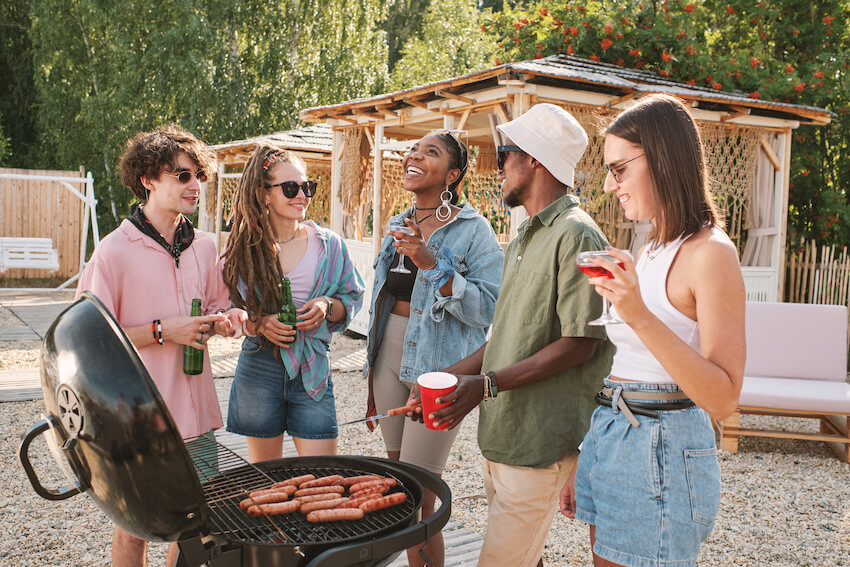
Outdoor cooking has changed. It is no longer reserved for big gatherings or special occasions. Many people now grill on weeknights after work, then rely on the same setup for friends and family on weekends. That shift creates a real challenge. One grill must handle fast, low-effort meals and larger social events without stress.
Choosing the wrong setup often leads to slow preheating, uneven cooking, or limited space when guests arrive. The right grill setup avoids those problems. It balances size, heat control, layout, and ease of use. You do not need the largest grill available. You need one that matches how often you cook, how many people you serve, and how much space you have.
Many buyers focus only on burner count or price. That approach usually ends in regret. A better method starts with real use cases. Think about weeknights first. Then think about weekends. That order helps you avoid overbuying while still staying prepared for guests.
This guide breaks the decision into clear steps. Each section answers a common question people ask when choosing a grill setup. By the end, you should know which type of grill fits your routine and your space—without guessing.
What Grill Size Works Best for Weeknight Cooking?
Weeknight grilling depends on speed and control. Most people cook for two to four people after work. Time is limited. Energy is low. A grill that is too large takes longer to heat and uses more fuel than needed. That slows everything down. A grill that is too small feels cramped, even for simple meals.
For most households, a medium grill size offers the best balance. It heats quickly, handles common meals, and avoids unnecessary fuel use. It is also easier to clean, which matters when grilling becomes a regular habit.
When thinking about size, focus on cooking surface rather than burner count. Burners tell only part of the story. Cooking area determines how much food you can prepare at once. On weeknights, meals are usually simple. You rarely need room for everything at the same time.
How Cooking Habits Shape Size Needs
Daily habits matter more than special events. If you grill three or four times a week, comfort and speed matter more than maximum capacity.
Common weeknight foods include:
- Chicken breasts or thighs
- Burgers
- Fish fillets
- Small batches of vegetables
These foods cook well on a medium surface without crowding.
Typical Size Ranges for Weeknights
| Household Size | Suggested Cooking Area |
|---|---|
| 1–2 people | 300–400 sq in |
| 3–4 people | 400–550 sq in |
| 5+ people | 550+ sq in |
This range explains why many households settle in the middle. It supports daily meals without wasted space.
Why Smaller Can Be Better on Busy Days
A smaller or mid-size grill:
- Heats faster
- Uses less gas
- Takes less time to clean
- Feels less intrusive on patios or balconies
Those advantages add up when grilling becomes part of everyday life.
When Weeknights Still Need More Space
Some households cook full meals outdoors every night. If you grill mains, sides, and sauces together, extra space helps. In that case, choose a medium grill with a smart layout rather than jumping to an oversized model.
Weeknight cooking sets the baseline. Weekend needs should build on that base, not replace it.
How Much Cooking Space Do You Really Need?
Cooking space is often misunderstood. Many buyers assume more space is always better. In practice, too much space can work against you. Heat spreads wider. Fuel use increases. Temperature control becomes harder.
The goal is usable space, not maximum size. You need enough room to cook without crowding, but not so much that managing heat becomes a chore.
Daily meals should guide this decision. Parties happen occasionally. Everyday cooking does not.
Active Space vs Total Space
Not all grill space gets used equally. Some areas stay hotter. Others remain cooler. Warming racks and edge zones help, but they should not determine overall size.
Common Cooking Scenarios
Think through real meals:
- Two steaks with vegetables
- Four burgers with buns
- Chicken pieces with corn
Each fits comfortably on a medium grill when space is planned well.
The Problem With Crowding—and With Excess
Crowded grills cause:
- Poor searing
- Steaming instead of grilling
- Longer cooking times
Oversized grills cause:
- Uneven heat zones
- Higher fuel use
- More difficult control
Matching Space to Frequency
| Cooking Style | Space Priority |
|---|---|
| Daily family meals | Medium, even heat |
| Mixed meals and sides | Medium with zones |
| Large parties every week | Large surface |
Most households fall into the first two categories.
Planning for Growth Without Waste
If you expect more guests later, look for grills that support accessories. Warming racks, griddles, and side burners extend capacity without adding unused surface area.
A good grill feels comfortably full during normal use—not empty.
Is a Built-In or Freestanding Grill Better for Your Home?
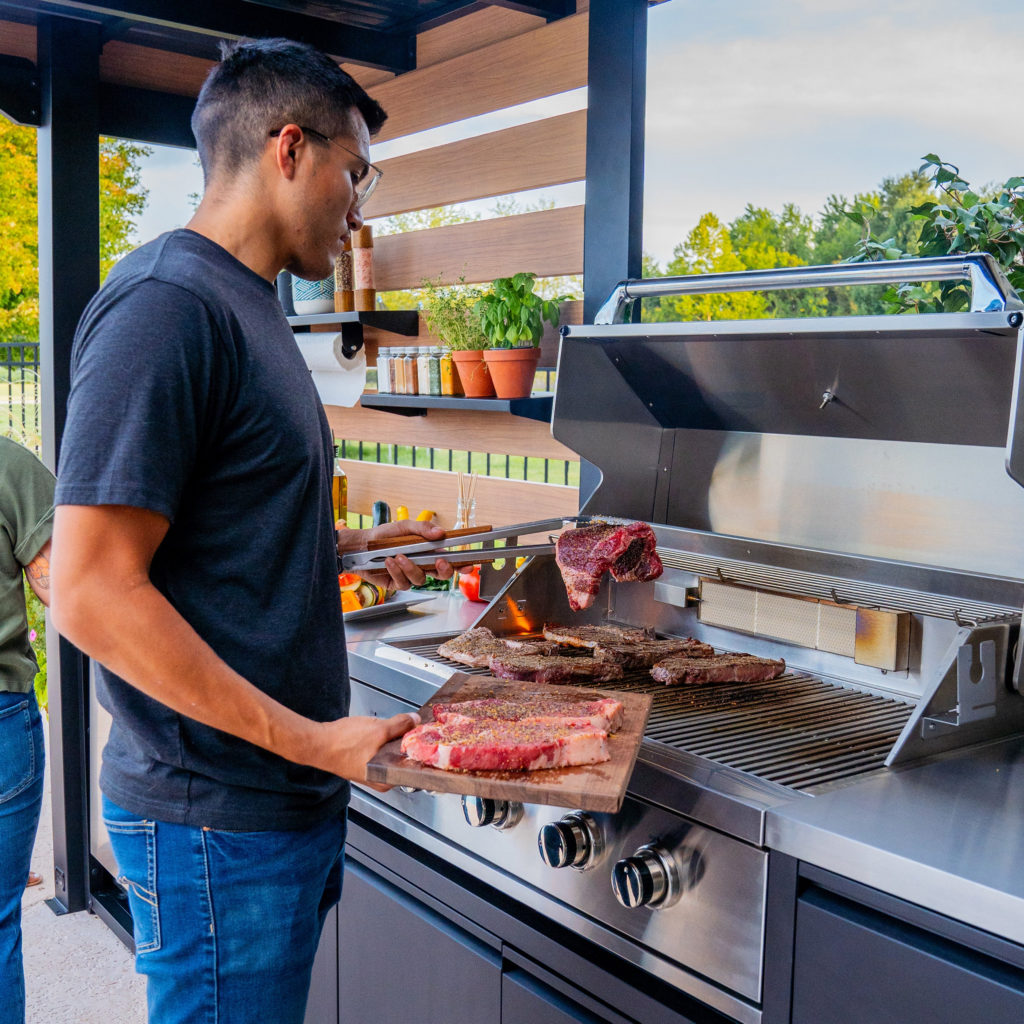
Layout and installation shape how a grill fits into daily life. Both built-in and freestanding grills work well, but they serve different needs.
Freestanding grills suit flexibility. Built-in grills suit permanence.
Freestanding Grill Advantages
- Easy to move
- Lower installation cost
- Works on patios and decks
- Allows layout changes
They suit renters and homeowners who like flexibility.
Built-In Grill Advantages
- Clean, integrated appearance
- Stable during use
- Pairs well with counters
- Supports frequent hosting
They fit homes where outdoor cooking is part of the design.
Daily Use vs Weekend Hosting
Freestanding grills work well on weeknights. You can roll them closer to the door, clean them easily, and store tools underneath.
Built-in grills shine on weekends. Prep space stays nearby. Guests gather comfortably. Tools remain organized.
Cost and Commitment Comparison
| Feature | Freestanding | Built-In |
|---|---|---|
| Installation effort | Low | High |
| Mobility | High | None |
| Visual integration | Moderate | High |
| Upgrade ease | Easy | Harder |
The right choice depends on how settled your outdoor space is, not on appearance alone.
How Many Burners Are Enough for Everyday Use?
Burner count gets a lot of attention, but more burners do not automatically mean better cooking.
For most households, three to four burners handle daily cooking with ease. That setup offers control without adding complexity.
What Burners Really Do
Burners create heat zones. Zones allow control. Control improves results.
More burners help when:
- Cooking many items at once
- Using indirect heat
- Managing different temperatures
They add little value when meals stay simple.
Burner Count and Best Use
| Burners | Best For |
|---|---|
| 2 | Small meals, tight spaces |
| 3 | Daily family cooking |
| 4 | Mixed meals and guests |
| 5+ | Frequent large parties |
Three burners allow hot, medium, and low zones—enough for most routines.
Downsides of Too Many Burners
Extra burners add:
- More controls to manage
- More cleaning work
- Higher fuel use
On busy nights, simplicity matters more than flexibility.
What Grill Features Help When Hosting Larger Groups?
Hosting shifts priorities. Speed matters less. Capacity and control matter more.
Helpful hosting features include multiple heat zones, side burners, warming racks, and stable temperature control.
Heat Zones
Zones allow:
- Direct cooking for meats
- Indirect cooking for larger cuts
- Holding food warm
This keeps food ready without rushing.
Side Burners
Side burners handle:
- Sauces
- Vegetables
- Boiling or reheating
They keep the main grill clear and reduce trips indoors.
Warming Racks
Warming racks hold finished food without overcooking. They help when guests eat at different times.
Feature Overview
| Feature | Hosting Benefit |
|---|---|
| Multiple zones | Cook several items at once |
| Side burner | Prep flexibility |
| Warming rack | Better timing |
| Lid design | Even heat |
Good hosting is about flow. The right features support that flow without making the grill harder to use on quiet nights.
Conclusion
The right grill setup is not about chasing specifications. It starts with how you cook on normal days, then expands to how you host. Weeknight needs define size, speed, and ease of use. Weekend needs add capacity and flexibility.
A balanced setup heats quickly on busy evenings and opens up smoothly for guests. That balance comes from honest planning, not from buying the biggest grill available. When grill size, layout, and features match real habits, outdoor cooking becomes part of daily life instead of a chore.